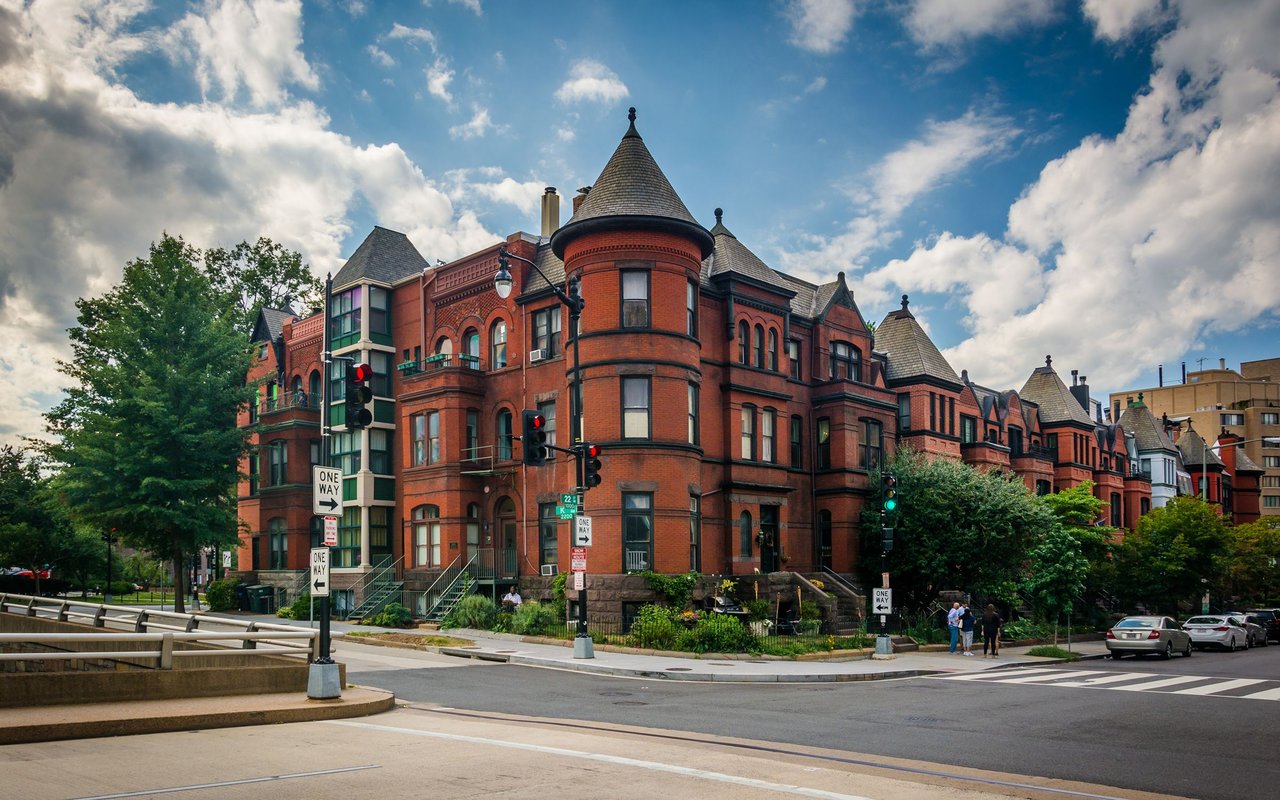
The U Street Corridor is a commercial and residential district in Northwest Washington, D.C, U.S.A., with many shops, restaurants, nightclubs, art galleries, and music venues along a nine-block stretch of U Street. It extends from 9th Street on the east to 18th Street and Florida Avenue on the west. Most of the area is part of the larger Shaw neighborhood, with the western end entering the Dupont Circle neighborhood. The U Street Washington Metro station serves it. U Street is largely a Victorian-era neighborhood, developed between 1862 and 1900, the majority of which has been designated a historic district. The area is made up of row houses constructed rapidly by speculative builders and real estate developers in response to the city's high demand for housing following the Civil War and the growth of the federal government in the late 19th century. The corridor became commercially significant when a streetcar line operated there in the early 20th century, making it convenient for the first time for government employees to commute downtown to work and shop.
The U Street area has made redevelopment a priority to return the area to provide desirable commercial products. Examples of those development efforts are the Reeves Center, located at the intersection of 14th Street and U Street, by city investments totaling $50 million, increased accessibility with Metrorail and bus stops on U Street, the implementation of Capital Bikeshare, funding by the Department of Housing and Urban Development promoted historical significance known as "Remembering U Street", new construction as well as rehabilitation projects provided more quality housing in the area.
U Street has long been a center of Washington's music scene, with the Lincoln Theatre, Howard Theatre, Bohemian Caverns, and other clubs like on 9th Street at Harrington's, and Chez Maurice Restaurants and historic jazz venues. The 9:30 Club, the Black Cat, DC9, U Street Music Hall, and the Velvet Lounge musical venues are located on the corridor, which is also home to the D.C. music collective Spelling for Bees. U Street also hosts the annual Funk Parade, a festival and celebration of funk music, community arts, and creativity. Public art, graffiti, and murals can be found on almost every corner along U Street. In 2011, U Street NW was designated a Great Street among Great Places in America by the American Planning Association. It is said to have been selected in recognition of the street's return to its grandeur after several decades of difficulties. Once again, the street hosts the arts, food, and businesses.
[Source: Wikipedia]
9,013 people live in U Street, where the median age is 34 and the average individual income is $123,287. Data provided by the U.S. Census Bureau.
Total Population
Median Age
Population Density Population Density This is the number of people per square mile in a neighborhood.
Average individual Income
There's plenty to do around U Street, including shopping, dining, nightlife, parks, and more. Data provided by Walk Score and Yelp.
Explore popular things to do in the area, including Lowest Price Food Mart, El Baraiso Grocery, and Backcountry.
| Name | Category | Distance | Reviews |
Ratings by
Yelp
|
|---|---|---|---|---|
| Dining | 0.19 miles | 0 reviews | 0/5 stars | |
| Dining | 0.22 miles | 0 reviews | 0/5 stars | |
| Shopping | 0.17 miles | 1 review | 5/5 stars | |
| Active | 0.07 miles | 7 reviews | 5/5 stars | |
| Active | 0.1 miles | 0 reviews | 0/5 stars | |
| Active | 0.33 miles | 0 reviews | 0/5 stars | |
| Nightlife | 0.16 miles | 0 reviews | 0/5 stars | |
| Beauty | 0.13 miles | 0 reviews | 0/5 stars | |
| Beauty | 0.17 miles | 0 reviews | 0/5 stars | |
| Beauty | 0.18 miles | 0 reviews | 0/5 stars | |
| Beauty | 0.21 miles | 0 reviews | 0/5 stars | |
|
|
||||
|
|
||||
|
|
||||
|
|
||||
|
|
||||
|
|
U Street has 5,087 households, with an average household size of 2. Data provided by the U.S. Census Bureau. Here’s what the people living in U Street do for work — and how long it takes them to get there. Data provided by the U.S. Census Bureau. 9,013 people call U Street home. The population density is 43,856 and the largest age group is Data provided by the U.S. Census Bureau.
Total Population
Population Density Population Density This is the number of people per square mile in a neighborhood.
Median Age
Men vs Women
Population by Age Group
0-9 Years
10-17 Years
18-24 Years
25-64 Years
65-74 Years
75+ Years
Education Level
Total Households
Average Household Size
Average individual Income
Households with Children
With Children:
Without Children:
Marital Status
Blue vs White Collar Workers
Blue Collar:
White Collar:
Local expertise and personalized guidance to help you make your next move with confidence.
Dedicated local insight and tailored guidance for every step of your real estate journey.